20.03.26

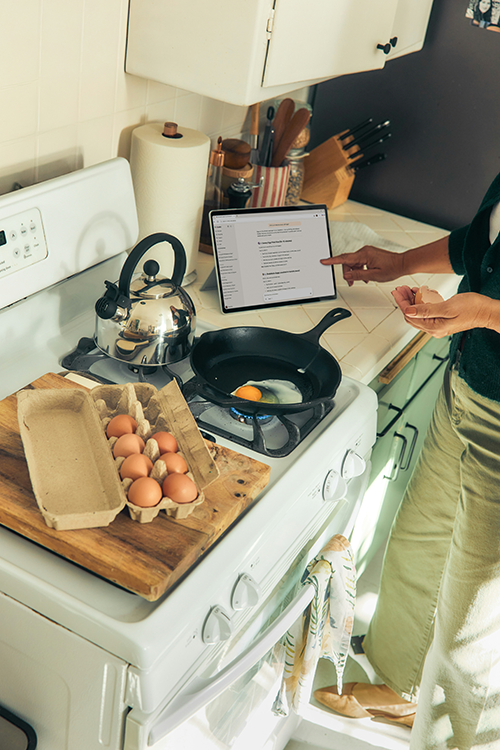
I just read a very interesting article from the BBC - and it seems as though to protect against invisible AI, there’s a push for an organic range of digital content.
There was a time when the great cultural fault lines were simple.
Did it contain gluten?
Was it plant-based?
Was it organic, free-range, hand-reared, cold-pressed, unprocessed or churned by a woman called Margaret in a windmill?
Now a new ingredient has entered public life, causing the same level of panic, superiority, and awkward dinner-party conversation:
AI.
Suddenly, every piece of work risks being treated like a suspicious sausage roll.
“Is this fully human-made?”
“Has this been near a chatbot?”
“Was any part of this lightly machine-assisted in a facility that also processes large language models?”
We have reached the point where AI is discussed less like a tool and more like an unsavoury additive. Not a method, not a process, not a spectrum. Just a contaminant.
Either it’s in, or it’s out.
Pure, or polluted.
Artisanal sourdough, or fluorescent luncheon meat.
And this is where things get silly.
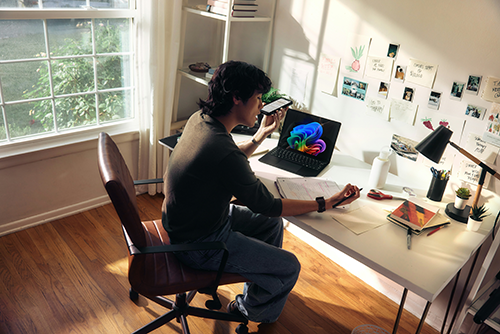
Because most real creative work does not happen in these neat little categories. A student might use AI to brainstorm five bad titles before choosing a better sixth one themselves. A writer might ask for feedback on structure, then spend three hours rewriting every sentence. A designer might use AI to explore ideas, then discard 95% of them and painstakingly make the final piece their own.
That is not “fully AI.”
It is also not “AI-free.”
It is, maddeningly for the absolutists, human work with some AI in it.
Like a stew with one controversial ingredient that nobody can stop talking about.
The problem is that we have started treating any detectable amount of AI as if it invalidates the entire dish.
A poem with one AI-assisted line? Ruined.
An essay with AI used for planning? Fraudulent.
A presentation where ChatGPT helped tighten the intro? Basically robot propaganda.
By this logic, we should also reject:
The irony is that the loudest debates about AI often erase the very thing they claim to protect: human contribution.
They flatten everything into a purity test.
But education, creativity and work are not improved by purity tests. They are improved by transparency.
That is the point.
Not “absolutely no AI ever touched this.”
Not “the machine did it, so the human doesn’t count.”
But: what was the role of AI, and what was the role of the human?
That is a much more useful question.
It recognises that the value is not in pretending AI doesn’t exist. It is in showing how it was used, where judgment happened, where originality happened, where revision happened, where the actual thinking happened.
In other words, instead of slapping a giant AI-FREE badge on everything like a supermarket trying to reassure you about yoghurt, maybe we should be using labels more like:
Contains some AI. Mostly human.
Human-led. AI-assisted.
Prompted responsibly. Crafted manually.
May contain traces of chatbot, but still made with care.
That would be both funnier and more honest.
And honesty matters, because once people can see the process, the conversation gets smarter.
You stop asking, “Was AI used?” as though that ends the matter.
You start asking:
Did the person think?
Did they make choices?
Did they understand the output?
Did they shape it, challenge it, improve it, own it?
That is where ShowMyAI comes in.
Because the answer to AI panic is not forcing everyone to perform digital veganism.
It is making AI use visible enough that we can tell the difference between:
The future probably is not “AI in everything” or “AI in nothing.”
It is a world where people can say, plainly and without shame:
“Yes, I used some AI.
No, it did not do the whole thing.
Yes, the human contribution still matters enormously.
And here’s the proof.”
Which, when you think about it, is much better than pretending the final product emerged untouched from a mountain cave by candlelight.
So perhaps the real label we need is not AI-free.
Perhaps it is:
Honestly made.
That would be good for learning, good for creativity, and good for everyone exhausted by false binaries and performative purity.
Also, it would save us from having to treat every essay, song, image, or business plan like a packet of processed meat.
Whether you’re:
Whether you're exploring a pilot, reviewing policy, or just starting the conversation internally – we can help.